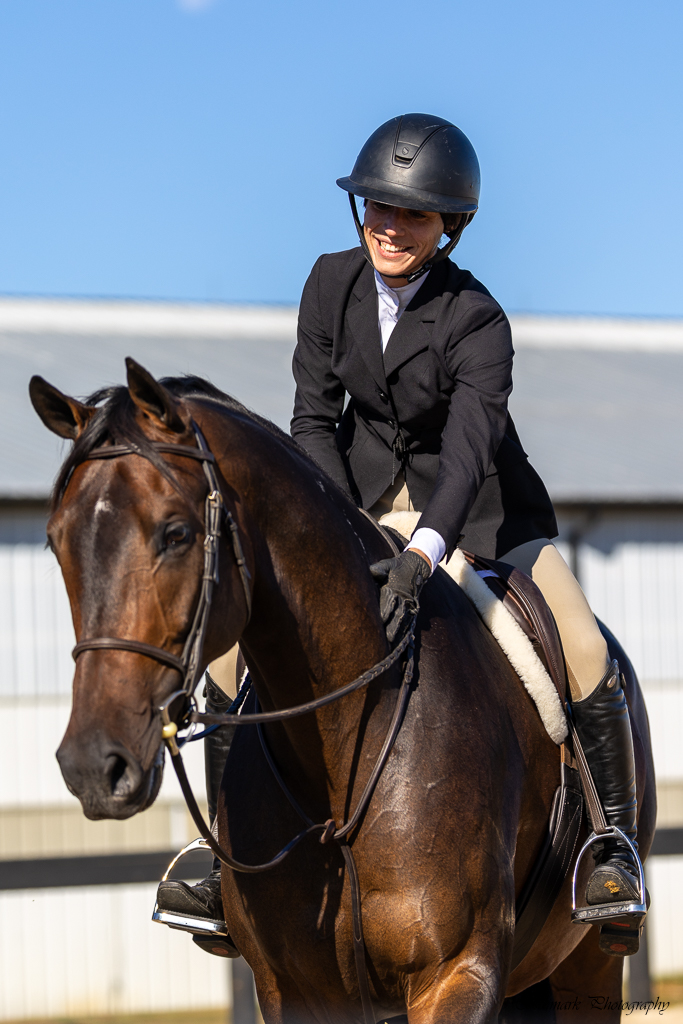
I have spent much of my life surrounded by horses, and the older I get, the more I recognize what an extraordinary privilege that is.
I don't believe being around horses is a right. It's an opportunity, a responsibility, and something I am genuinely grateful to experience every day.
Horses have given me far more than I could ever put into words. They've challenged me, humbled me, taught me patience, and helped me understand myself in ways I never expected. They've also given me a sense of freedom that, at certain points in my life, I wasn't sure I'd experience again.
My own experiences with physical health challenges changed the way I think about movement, balance, discomfort, confidence, and the relationship between the mind and body. Riding became a way for me to reconnect with myself. It gave me back a sense of independence, clarity, and possibility.
That experience deepened my appreciation for how much we ask of horses—and how important it is to understand what they're experiencing before deciding what they should be doing.
I became increasingly interested in biomechanics, equine behavior, psychology, physical comfort, and the countless ways horses communicate with us. Not because I was looking for one perfect training method, but because I wanted to become better at recognizing what each individual horse needed.
My foundation is rooted in classical horsemanship and the American Forward Riding System. I believe in sound principles, correct fundamentals, thoughtful preparation, and the importance of understanding why something works rather than simply repeating a method.
I also believe we never stop learning. Every horse, every rider, and every experience has something to teach us—if we're willing to pay attention.
That philosophy carries directly into my teaching.
I want my students to understand more than how to execute a movement, jump a course, or earn a ribbon. I want them to develop awareness, feel, judgment, empathy, and the confidence to think for themselves.
Not everyone learns the same way. Some riders need a different explanation, some need more time, and some need someone to recognize what they're struggling to communicate. I believe good teaching means meeting people where they are without losing sight of what they're capable of becoming.
The same is true for horses.
I don't believe in forcing an individual into a timeline or expecting every horse to respond to the same approach. When something isn't working, my first question is why? I want to understand the cause, not simply correct the symptom.
Above all, I want the horses in my care to have good lives, and I want the people who come through our gates to leave with a greater appreciation for them.
If my students become accomplished riders, I'll be proud of them. But if they also become thoughtful, compassionate, capable horsemen and women who recognize the privilege of working with these animals, I'll know we've accomplished something much more meaningful.
Because for me, it has always been, and will always be, about the horse.